04 May 2012

The Teacup Ride Face

I sometimes wish I'd not spent one of my 6 days in Japan at Tokyo Disney (because it's a near-exact replica of Disneyland). 

But then again, I wouldn't have seen these faces otherwise.


Alice and Ames, I'm sorry I forced you onto the teacup ride against your will.

21 April 2012

Japanese Food for Thought


Whether it is diving into a spa of naked ladies, or eating the strange concoction of ingredients on the plate in front of you,  I say go for it, no matter what. Maybe you're deathly allergic to shellfish or peanuts, and only then would I suggest making an exception.

The point is that you might not have an opportunity to try that food again, and tomorrow you'll be able to say you did that, and describe to others exactly what it tasted like.

I tend to try everything edible when I'm traveling. And then I return home and research what I just ate. Sometimes I wonder if I should be eating and researching in reverse order...


 The Food and Agriculture Organization of the United Nations reported in 2007 that Japan is home to less than 2 percent of the world's population, and accounts for more than 8 percent of the world's seafood consumption. My best guess is that this 8 percent has increased, considering this report indicating that global fish consumption is at a record high. 


 Gyutan, or grilled beef tongue, is a specialty of Sendai, a Northern Japanese city. Would you eat it? What about raw horse meat, fish sperm or whale burgers?


In 2010, Japan consumed 5,813 thousand kiloliters (or 1,535,632,134 gallons) of beer. That number maintained its seventh place on the Kirin Institute of Food and Lifestyle's list of global beer consumption by country. Above Japan on this list, in order, are China (#1), the United States, Brazil, Russia, Germany and Mexico. That number might have something to do with the fact that beer is available for purchase in vending machines on just about every street corner in Tokyo.


17 April 2012

Get Naked. You'll Regret It Otherwise.

I forced new friends and travel companions to spend their first day in Japan traveling to the Arima onsen, or bathhouse, behind Mount Rokko.

Backstory: I get my kicks out of hiking that leads to natural hot springs. The experience is woodsy, aromatic and relaxing. You always meet someone who you expect lives there, or someone else who has traveled the world and has wild stories to tell. For me, hot springs have been a perk of living in Colorado and Oregon. And after months of rambling through cities, I was ready for serenity and the great outdoors.

My friends appeased me. They packed bathing suits and towels into their backpacks and followed me to the bus that would take us from Kobe to Arima. When we arrived we discovered a tranquil mountain town reminiscent of Breckenridge, Colorado, but much quieter and more calm.


We wandered around the trails of Mount Rokko, past small temples and shrines, and underneath trees with leaves so pink and so red you had to get up close to confirm they were real.


By now I was also questioning the authenticity of the famed Arima Onsen I'd read about online. I couldn't smell sulfur in the air, and none of these trails led us to any form of natural oasis.  Jill (whose beautiful photos are included in this post) and I spotted "bathhouse" on our poorly translated map, and took off into town to find it. We left the rest of our friends behind, who preferred to continue hiking the mountain than to bath in its springs.

We arrived at the onsen, and instead of discovering an outdoor sanctuary, walked into a building that reminded us of the entrance of a 24 Hour Fitness. We were instructed to take off our shoes and rent a locker immediately upon entry. We also instantly spotted a sign indicating that no bathing suits were allowed here. It practically read, "Strip Down or Get Out."

We made it this far. So we took off our shoes and rented lockers and wrapped ourselves in towels to avoid the inevitable until the very last second possible. We walked through a small door leading to the springs, which resembled the hot tubs you see in a gym locker room.

Were we in the right place? This wasn't exactly serene and outdoorsy. Jill and I exchanged panicked looks when one woman motioned for us to remove our towels. There was no need to express our discomfort out loud. In silence, we turned back around, dressed, returned our locker keys, and put our shoes back on. This wasn't what we expected, and we just couldn't go through with it.

In retrospect, I wish I would have ripped off my towel, and jumped into that tub with all of those naked ladies. Sure, it wasn't what I expected, but if I wanted to my standard hot springs experience, I could have waited until my return to the United States. Granted, we probably found a sort of spa, and not the hot springs we'd hoped for, but that was no excuse not to soak in some culture, so to speak.

I should have gotten naked and dove in, both to respect my environment and to embrace these sorts of conundrums that everyone experiences when they travel. If you ever come upon a situation like this, I highly recommend stripping down and sucking it up. It will be a much less embarrassing story to tell when you return to your friends who have found the natural spring on their hike.

21 July 2011

Grabbag

In no way do I intend to trivialize my experience in China (or anyone else's for that matter), but I will say that the list of places I saw while in Beijing came out of a travel guide. I saw the Great Wall, of course, and the Summer Palace, the Ming Tombs, and the site of the 2008 Olympics. I traveled with my fellow tea scammed for the week that I was there, which didn't help to separate me from all of the other tourists meandering the same route of historic places.


As redeeming as it was to share tales of Chinese landmarks when home and have friends and family actually know what I was talking about, travel is more worthwhile when I don't come home with a host of stories that could have come out of Frommer's. (No offense Frommer's)

It's easy to get lost in the crowd in a new city, but if you're paying attention you might pick up on a couple of things like these to distinguish your trip...

Foridden City take one...


And take two...


Despite the inevitable crowds at The Summer Palace, there's peace to be found on-site at Kunming Lake. You wont regret renting a paddle boat and taking in the sights from afar.   

The PekingUni International Youth Hostel is an extension of campus dorms that will land you in a bunk next to a variety of students and travelers from all over the world. I happened to meet a professor from Shanghai and a lost adventurer whose next stop was Cambodia. I recommend bringing an extra blanket to this dig - the two sleeping options are under the thin blanket provided, or with arms and legs exposed using the blanket as a sort of cushion for the mattress, or I should say board, below.

Down the street from the hostel is Lush Bar, which sits atop a bookstore and some other clothing shops. It's an American-style pub and open mic venue owned by an Australian and one of China's former pop stars. Be careful with the giant electric blue Adios Mothafuckas- after one of those I was singing an old Dave Matthews favorite (off-key and 3 beats behind) to the room of strangers.


We saw an acrobatics show that was a humble Cirque de Soleil with performers so bendy I felt compelled to do more yoga upon returning home.


Immediately after being tea scammed, we stumbled upon what I like to call "the skewer festival"- an outdoor food market with snacks on sticks for strong stomachs, and adventurous eaters. I ate snake and banana cakes. My friends grubbed on chicken stir fry wraps ans silkworm. Also available at this market: starfish, shrimp, scorpion, squid, cat and dog. 


08 May 2011

The Tea Scam

It was hard not to follow Janie. She wanted to practice her English with us. She complemented our beautiful skin. And she offered to lead us out of the cold and away from the swarms of other tourists.

After a long night at the ice bar in Hong Kong and an early morning flight, we were exhausted when we arrived in Beijing. Despite our fatigue, we'd adopted the traveler's "I'll sleep when I get home" mentality, so we headed out to visit Tiananmens Square.

The sun lay close to the horizon for more than half the day, reminding us that we were across the world from home. When it finally did go down, we found ourselves buying expired "2008 Olympics" beanies to stay warm.

When Janie approached us I wondered how she found us, or why she chose us, in the sea of other visitors at the world's largest city square. When I look back at the photos and consider our head wear, I realize how easy it was for her to spot us, even from across the site's 440,000 square meters.


When Janie spoke our language and offered to lead us to a restaurant with some of China's most authentic cuisine, we gladly accepted her invitation. We followed her white leather-shoed footsteps out of the square and into a series of dark streets, all lined with tall brick walls. She adjusted her sparkling headband often, chatting away about her love for the American Pie movies and the Backstreet Boys. We adjusted our beanies further down over our ears as the cold night set in, and continued to follow this stranger who promised a Chinese experience different than the tourist trap at the Square.

We emerged out of the walled alley ways onto a busy street with red lanterns hanging across skyscrapers above. Janie led us to a small restaurant brimming with eaters and imbibers. "It's too busy here," she complained. "Let's go get a beer first."

So we followed her again through the maze of brick walls, disappearing again into the dark network of alleyways. This time when we came out, we were on a darker, quiet street. I wished there were lanterns -it was so dark, and bitter cold, and I was starting to wonder why we'd walked so far for a brew. Wasn't there alcohol on the busy street we'd been on before?

Janie knocked on a dark green door. A grandmother-like woman silently opened it up and motioned for us to come inside. She counted the eight of us, and corralled four of my friends into one small room, and four of us into another. Before I could ask where the beer was and what the hell we were doing, another woman came in and delivered teacups and a variety of herbs to our table. She didn't speak either, but she began filling our cups with samples of tea - ginseng, jasmine, fruit tea, wheat tea, green tea, black tea.


Janie translated. "This is a traditional Chinese tea ceremony. These small cups are meant to be drank in three sips. Place your pointer finger and thumb around the rim of the cup and your middle finger underneath. Go ahead, try it."

We drank the small cups of tea in three sips each. Janie instructed the guys in our group to stack up their other two fingers underneath their middle fingers while drinking, and the girls to point theirs out. This was a sign of male professionalism and female beauty, she said. I wondered if my other four friends were also stacking their fingers in the other tiny room.

Janie taught us "Gan Bei," or cheers, and encouraged us to keep trying the different varieties of tea. I had no idea where in China I was, how I would get back to my hostel, or where the food and beer I'd been promised was, but the tea was delicious so I kept sipping.


Ten varieties of tea later, and yet another woman came in to deliver receipts. They were written in Chinese, obviously, so Janie continued translating. "500 Yuan... each." 

My friends and I stared at each other in shock. We hadn't been given a menu, and we had never expected to rack up a bill of $75 American dollars each. We looked to Janie hoping to find similar shock in her face, but all we saw were her sparkling headband and cheerful smile flashing back at us.

So we paid. We came out of the little room to find our four other friends similarly awestruck by the price of the tea ceremony, and the distinct suspicion that we'd all been scammed.

Janie stayed behind at the tea house, where she had clearly come from in the first place, and bid us farewell before we walked back out into the cold, dark alleyway. We walked away in silence, with absolutely no idea where we were going. We pulled our beanies back down over our ears.
04 January 2011

24 Hours in Hong Kong

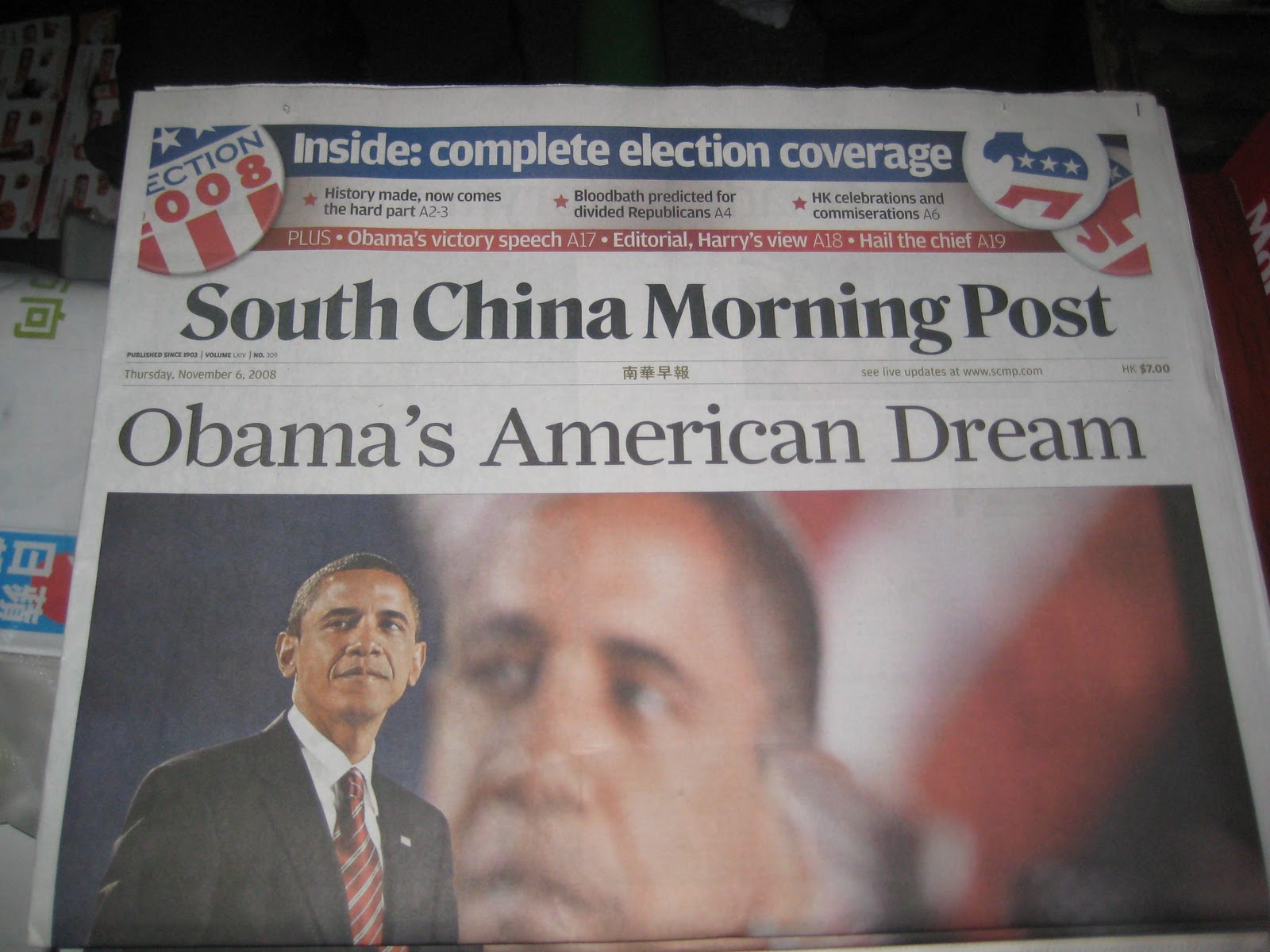
I don’t step onto land when I step off the ship in Hong Kong. Instead, I step into a hallway portal that spits me out into a fluorescently lit shopping mall. There’s a Starbucks next to Calvin Klein with a stack of newspapers on the counter all featuring Barak Obama’s face on the front cover. Today is November 13th, 2008.


It feels like a mile of window shopping before I see sunlight. I wait for the ferry from Kowloon Island to Hong Kong Island while Taylor buys an egg something from a street vendor.


 We get off the ferry and onto a two-story cab/bus that weaves between skyscrapers that make me feel as if I’m inside of a video game.


We ride the trolley up to Victoria Peak.


We stroll the Hong Kong Botanic Gardens…


And Hong Kong Park.


We catch the ferry back to Kowloon Island…


so that we can catch the light show at nightfall.


Before the night is through we’ll go over the ferry once more to drink at The Russian Vodka room, a bar made of ice. Too bad I’m allergic to vodka. I went for the parka, anyway.

08 December 2010

Gains and Loses

November 5, 2008


My back's to the wake of the ship, roasting. Sitting crosslegged on the wooden deck against the metal railing. Journal in lap. Pen ready. The assignment: write a list of things gained and lost thus far on this journey. Here goes.


Gains: 
friendships, connections
passion for writing things down
a floating home
energy
the notion of self- morally, professionally, humorously
a sense of adventure, and open-mindedness 
travel bug
this could go on for a while...


Loses:
the birth of my nephew
a landmark election (the first time I ever voted was absentee via sea)
football season
the change of seasons
some of my vulnerability
my own reality 
a sense of time 
  

I recommend writing this list whenever you travel, especially on long journeys. Write it at your halfway point like I did, and then rewrite it again when you get home.

01 December 2010

Grabbag

Randomness and highlights from a week in Vietnam, in no particular order, with no particular meaning.


The view from the bar that I brought my laundry to.


Bag of laundry in one hand, Tiger beer in the other. Travel will definitely push the limit on what you're willing to carry around with you. We've even got a backpack in this one.


 Kem Bach Dang ice cream topped with pineapple, figs, and my first strawberry since leaving the United States. Amy's face says it all.


Peace and quiet.


Drink menu...


... I ordered the avocado shake instead (didn't order the American flag). I'm still wondering what a "Sex on the Pool" is. 


My final journal entry before boarding the ship: 

Vietnam was the most all-encompassing port yet. Educational, culural, visual, fun!, entertaining, tasty, emotional... the most meaningful.

16 November 2010

War Journalism: A Question of Ethics

An image at the War Remnants Museum has got me thinking about ethical journalism. It was a photo of a terrified family holding on to one another; the caption read that the photographer asked a firing squad standing out of the photo’s frame to hold fire so that he could take his shot first.

I think he exploited the family in their time of ultimate fear and confusion –at what point does documentation become dehumanization?


I went on to irrationally slander war journalists for passively witnessing cruelty for their work. I called them cowards. The writing, which I’ll respectfully exclude from Global Osmosis, reflects the frustration and sadness that I felt as I examined the gruesome, chaotic, devastating photos at the War Remnants exhibit. Ignorant to the extent of the war before visiting Vietnam, I was overwhelmed by its chronic impact.

I am a visual learner. It wasn’t until I could see the conflict (euphemism for carnage) between America and Vietnam, in the museum photos that I could even begin to comprehend it.

War photographers, as a whole, are far from cowardly. It would be hypocritical to nark on these journalists who have heightened my understanding of what exactly a war is. And in the same breath I still question where you draw the line and put down the damn camera.

01 November 2010

War Tour

While I'm not typically an advocate of guided tours while traveling, I can honestly say that I got more out of these few hours in Vietnam than I've gotten out of days, even weeks, in other places. The war became tangible for me on a tour of the Cá»§ Chi Tunnels.

Here's a photo tour; I hope you approach it with skepticism. 


A series of underground tunnels underlies Ho Chi Minh City. This network called the Cá»§ Chi Tunnels is deeply rooted in Vietnamese soil and history. During the war, the tunnels hosted a whole range of activities- from hiding to combat, from transportation of supplies to access to medicine. 


The tunnels have since been expanded to accommodate large groups of tourists, and large tourists. 


Here's my foot next to the entrance. Hard to believe it used to be smaller, let alone the fact that people lived down there.


Paintings on the walls at the Cu Chi Tunnels exhibit.


The military cemetery for the Viet Cong and the North Vietnamese Army.


The final stop in the tour was a shooting range. Yes, a shooting range. It cost extra, and it was a spectacle, to say the least. I couldn't shoot a gun on these grounds. Couldn't even consider it. 


18 October 2010

"Effects Yet To Be Reckoned"

I once read that the United States military troops sprayed at least 20 million gallons of Agent Orange, or toxic herbicides, in Vietnam during the war. I looked it up, and according to the U.S. Department of Veterans affairs, this deadly chemical causes a variety of cancers, heart diseases, Hodgkin’s disease, Leukemia, diabetes, neuropathy and liver dysfunction. The chemical also causes birth defects, such as Spina Bifida, in the children of veterans. The physical mutations of Agent Orange in people in Vietnam were prevalent, to say the least.

I wrote one sentence in my journal the day we visited the War Remnants Museum:

Why does history keep repeating?


In Steve Hawley’s feature “What We Leave Behind” in the Winter 2004 Issue of the Bear Deluxe Magazine, he predicts, “Amid former battlefields [in Iraq], contaminated with depleted uranium, or DU, the true costs of war have yet to be reckoned.”

Hawley’s article reveals the overwhelming amount of toxic DU in Iraq from U.S. bullets. The numbers are staggering- some 260 to 270 millirads of radiation are emitted with a single charred bullet. Hawley points out that the limit of exposure for non-radiation workers is 100 millirads per year.

He also points out research suggesting that damage done by DU often manifests itself in the next generation. Just like Agent Orange, DU is a genotoxin that alters DNA, often in the children of people who have been exposed to it.

I’ll write it one more time:

Why does history keep repeating?

13 October 2010

Quite The Show

"Show don't tell."

That's what every teacher and professor has instructed me to do with my words for as long as I can remember. Writing should paint a vivid picture with sensory statements and artfully incorporate detail.  It should establish a sense of place, so much so that the reader feel as if he or she is there.

It's often difficult to show rather than tell travel stories because they represent my individual perceptions. They are not generalizations about these places or these people; they are just my own experiences. In no way am I qualified to speak knowledgably about these cultures. I'm simply documenting the mere hours I was there.

As you read my blogging, specificially about Vietnam, I encourage you to keep in mind that these are my own experiences painted with colorful words. In order to explain the things that I saw and how I felt about them, I must write candidly.


I visited the War Remnants Museum in Saigon and joined a mass of other tourists to mill through it's sobering maze of artifacts, books, testimonials and photography about "The American War in Vietnam." The western world calls it "The Vietnam War." Enough said.

As I scanned war photography, an English woman came alongside of me to ask what information I'd learned about the war in American school, and I was ashamed to respond "not much." Sure "The Vietnam War" had been in my textbooks, but certainly not in the graphic detail I experienced at the museum that day. It was at that photography exhibit that the war became tangible to me, and this is what I wrote...

Images That Will Never Leave Me

A soldier doubled over magazine crates, sobbing. The photographer must have caught him taking a private moment.  

The black and white of an airplane lifting a dead American soldier from underneath. Bold and simple. While dead American soldiers were flown home, dead Vietnamese soldiers were left to die in the ruins.

An American soldier crouching in the grass to hold the bloody remains of a Vietnamese civilian. His face is ragged and torn. I have no words.

05 October 2010

Worthwhile Wake-Up Call

I woke up early and sleepily trudged to the bus that would be taking me to one of the most authentic forms of entertainment in Vietnam, or so everyone said. I was skeptical. In my pre-coffee haze I started to question why an early morning water puppet show had sounded like such a good idea.

Maybe I was intrigued by the ambiguity involved with Vietnamese water puppetry. It takes two to three years of training in school to learn the secrets of crafting the bamboo puppets. Historically, some shows were performed in villages in secret so that overruling governments couldn’t copyright them.

Our bus arrived and we assembled into a small outdoor amphitheater with a pond-sized pool where you’d expect a stage to be. From seemingly out of nowhere, a cast of bamboo characters appeared on the water. They erupted into an intricately choreographed routine.


I finally awakened from my slumber after the first splash of water on my face. The energetic, multicolored puppets held my captive attention for the rest of the show.

The puppeteers came out from behind the back curtain at the end of the show to reveal a bit of the mystery. During the performance, they wade in the pond and operate the puppets from underneath the surface of the water.


It’s clear they’ve put a great deal of practice into the routine, and their beaming faces suggest the amount of pride they take in their performance.


Water puppets are integral to Vietnamese culture; they represent a commitment to detailed craftsmanship, and emphasize the significance of education. The puppets have been used in the rice and rain ceremonies. They even suggest a certain gender division of labor. Our speaker tells us that women were not allowed to know the secrets of the puppets until 1956. He says, “Since then, the shows have become more gentle and beautiful.”

The puppet show is one I recommend to anyone traveling in Vietnam. It’s bright, entertaining and bound to make you smile. It’s worth waking up for.